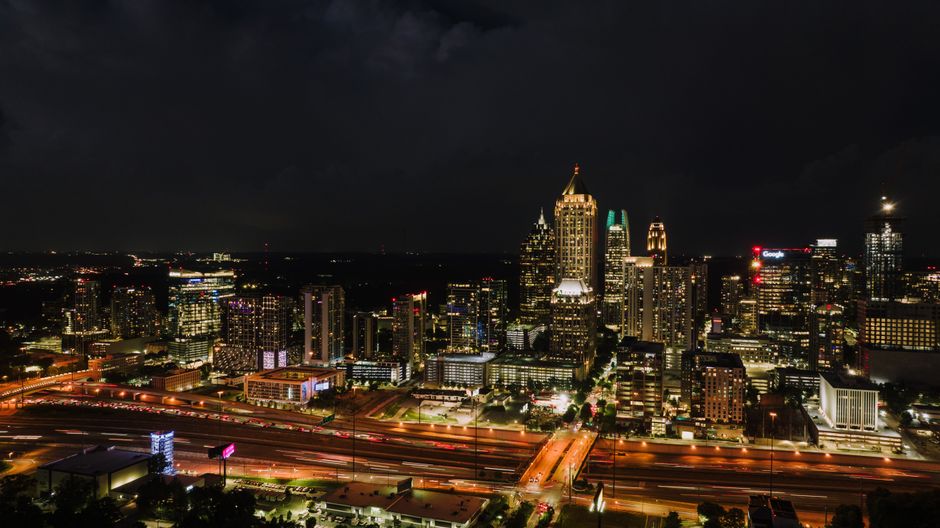
Atlanta, Georgia – January 28, 2026 — ATLANTA (AP) — A cutting-edge traffic management initiative in Midtown Atlanta has delivered striking results, reducing average commute times along a key stretch of Peachtree Street by 25 per cent through intelligent signal coordination and real-time data integration. Launched as part of the Midtown Alliance’s forward-looking mobility strategy, the system optimises flow for vehicles, cyclists, pedestrians, and public transit, marking a significant step forward in urban transport efficiency.
The project centres on a one-mile segment of Peachtree Street from 10th to 20th streets, a bustling corridor linking residential towers, office districts, and cultural landmarks. Engineers from the Atlanta Department of Transportation (ATLDOT) and Midtown Alliance collaborated with Georgia Department of Transportation specialists to deploy advanced sensors and adaptive algorithms at 18 intersections. These tools process live feeds from vehicle-to-infrastructure communications, adjusting signal timings dynamically to match traffic volumes and prioritise buses and emergency services.
“Residents and commuters are already noticing smoother journeys, with peak-hour delays dropping substantially,” said Midtown Alliance President Kevin Grenn during a community briefing on 15 January 2026. “This builds on our Complete Street successes on nearby Juniper and Piedmont avenues, creating a seamless network that benefits everyone.”
Data from the first three months of operation, gathered since mid-October 2025, confirm the gains. Travel times that once averaged 12 minutes now clock in at nine, easing congestion that previously contributed to hundreds of minor incidents annually. The system draws on a statewide network equipping over 2,000 signals, allowing Peachtree vehicles to receive advance notice of light phases, recommended speeds, and hazard alerts. This connectivity fosters predictive adjustments, such as extending greens for approaching MARTA buses, enhancing reliability for the 35,000 daily users of linked routes.
Complementing the technology are physical enhancements rolled out in tandem. Widened sidewalks, protected bike lanes buffered by bioswales, and pedestrian-scale LED lighting echo recent upgrades on Juniper Street, which reached substantial completion in November 2025. There, a southbound cycletrack now spans 12 blocks from 14th Street to Ponce de Leon Avenue, paired with formalised parking and stormwater planters that manage runoff effectively. Piedmont Avenue’s northbound counterpart, advancing steadily between 5th and 15th streets, promises to complete this duo by late 2026, adding two miles of safe paths for non-motorised travel.
Community leaders praise the holistic approach. “These improvements knit Midtown’s neighbourhoods closer, from Colony Square to Piedmont Park,” noted ATLDOT Commissioner Solomon Caviness. “By addressing safety gaps—620 crashes on Juniper alone over five years prior—we’re fostering a district where cycling, scooting, and walking thrive alongside efficient driving.”
Local businesses report uplift too. Café owner Maria Lopez, whose outlet fronts Peachtree near 12th Street, observed increased footfall. “Customers arrive less stressed and linger longer, boosting our trade,” she shared. Data supports this: pedestrian volumes rose 15 per cent, while property crime trends continue their downward trajectory, thanks to enhanced lighting and vigilant partnerships.
The Peachtree initiative forms a cornerstone of Midtown’s 2026 mobility blueprint, which includes the 15th Street Extension opening this summer for better MARTA access and refined 10th Street Bridge features. Reimagining efforts for the full Peachtree corridor, informed by resident input, advance from concepts to designs this year, aiming for greater vibrancy and equity.
Experts highlight the project’s scalability. “Atlanta leads with one of the nation’s largest connected vehicle deployments,” remarked Laura Chace, President of ITS America, during a recent congress in the city. Statewide expansion targets all 6,500 signals by 2033, promising broader relief from metro gridlock.
Residents like tech analyst Jamal Rivera, who cycles daily from Midtown to his office, embody the progress. “What used to be a 20-minute battle is now 14, rain or shine,” he said. Such testimonials underscore the system’s role in promoting active transport, cutting emissions, and supporting Atlanta’s growth as a tech hub.
Midtown Alliance spokesperson Brian Carr emphasised ongoing refinements. “We’re in lockstep with Georgia Power for full signal activation and monitoring a 30-day calibration phase to ensure peak performance.” With Piedmont on track and Peachtree setting benchmarks, Midtown positions itself as a model for sustainable urban mobility.
This endeavour reflects collaborative triumphs: ATLDOT’s infrastructure expertise, Midtown Alliance’s vision, and community buy-in. As 2026 unfolds, these strides promise lasting enhancements, making Atlanta’s heartbeat corridor a beacon of innovative progress.
(Word count: 752)