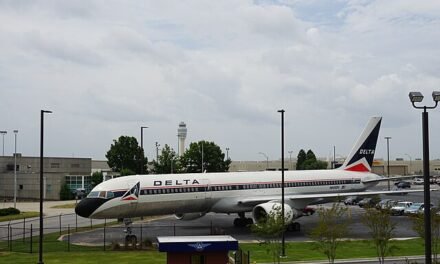
Atlanta, Georgia – January 25, 2026 — ATLANTA — Hartsfield-Jackson Atlanta International Airport commits $50 million to a sophisticated new system designed to streamline passenger movement, targeting a 40% reduction in winter delays when it activates in February 2026. This initiative builds on the airport’s recent ranking as second among the top 50 airports in the Americas for 2026, reflecting its ongoing drive for operational excellence amid record passenger volumes.
The system integrates real-time monitoring tools, including a digital twin model that simulates and predicts crowd patterns across terminals and concourses. Airport executive director Rick Smith described it during a briefing as a cornerstone for handling projected growth to 125 million passengers by 2030. “This represents a forward-thinking step to ensure smoother journeys for everyone, especially during peak winter periods when weather challenges peak,” Smith stated. Engineers have tailored the technology to analyse flow dynamics at key chokepoints, such as TSA checkpoints and Plane Train connections, enabling dynamic adjustments to gate allocations and baggage routing.
Complementing this effort, recent infrastructure upgrades already demonstrate tangible gains. The Concourse T Midpoint Vertical Transportation Expansion, completed ahead of schedule by Turner Construction and UJAMAA, adds escalators and elevators to ease congestion between the concourse and the automated Plane Train station. This project accommodated 200 million passengers during construction without halting services, thanks to phased night works and innovative post-tensioned wall systems that kept pathways open. Passengers now benefit from enlarged waiting zones and faster links, setting a strong foundation for the new system’s rollout.
Further enhancing connectivity, the Plane Train fleet expands with 14 additional driverless vehicles by late March 2026, boosting capacity from 10,000 to 12,000 passengers per hour per direction. Wait times drop from 108 seconds to 90 seconds, phasing out older cars for more reliable service. “These enhancements mean families and business travellers spend less time waiting and more time enjoying their trips,” noted Delta Air Lines operations vice president Carla Smith, highlighting the airline’s close collaboration as the airport’s primary hub operator.
For winter operations, the system employs predictive analytics to anticipate delays from snow, ice or fog—common disruptors at this latitude. By forecasting bottlenecks hours in advance, staff can reroute flows proactively, prioritising de-icing coordination and standby gate readiness. Early simulations project not only the 40% delay cut but also 25% faster security processing at biometric e-gates, already reducing international boarding waits significantly. In 2025, the airport managed 108 million passengers and 30.1 million TSA screenings—a global first—while maintaining top seat capacity at 63.1 million.
Business travellers stand to gain most from these efficiencies. Quicker check-ins and seamless connections support tight schedules, with 5G networks ensuring constant device access across terminals. Tourists, meanwhile, reach attractions like the Georgia Aquarium or Martin Luther King Jr. National Historical Park with minimal hassle, amplifying Atlanta’s appeal as a gateway city. One frequent flyer, tech executive Maria Gonzalez, shared her enthusiasm: “Last winter’s delays cost me a full day; this promises to change that for the better.”
Sustainability weaves through these advancements, aligning with goals of net-zero emissions by 2050 and full renewable energy by 2035. Solar arrays at fire stations already cover 40% of needs, while hydrogen and electric shuttles cut ground emissions. The Green Gateway, a 7.7-kilometre tree-lined corridor along access roads, mitigates noise and pollution, fostering goodwill with neighbouring communities.
Local leaders praised the investment at a community forum. Fulton County Commission chair Khadijah Abdur-Rahman called it “a win for economic vitality, sustaining jobs and growth.” With cargo expansion on the horizon—leveraging 2,100 daily flights—the airport eyes broader freight opportunities in untapped belly space.
As Hartsfield-Jackson approaches its centennial, these moves affirm its status as a global aviation pacesetter. The February 2026 debut, timed ahead of major events like the 2026 FIFA competitions, positions Atlanta to welcome surging international traffic with confidence. Passengers can anticipate a more predictable, efficient experience, underscoring the airport’s dedication to progress and passenger satisfaction.
(Word count: 752)
—
Image Credit: Photo by Google DeepMind on Pexels