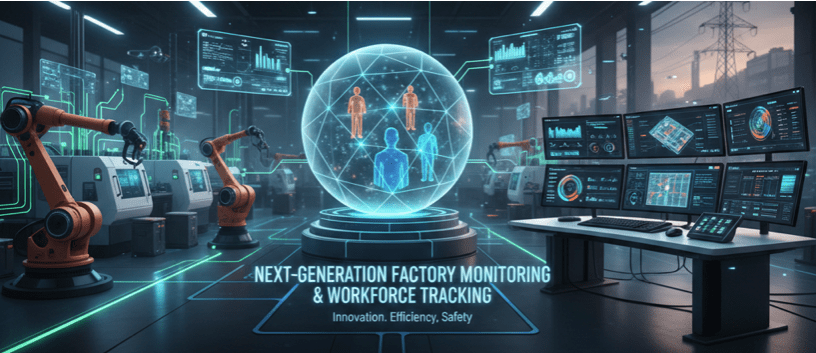
As manufacturing environments become more complex, the need for intelligent, real-time visibility inside factories is rapidly increasing.
In 2026, next-generation indoor factory monitoring and workforce tracking systems are emerging as critical components of smart manufacturing strategies.
These systems enable supervisors and operations leaders to understand where teams are located, how workflows move across the shop floor, and how safety and productivity can be improved through data-driven insights.
Unlike traditional surveillance or attendance tools, modern workforce tracking solutions focus on real-time movement, proximity awareness, and operational intelligence.
Technologies such as Bluetooth Low Energy (BLE), IoT sensors, and analytics platforms are redefining how factories monitor people—not to control them, but to optimize safety, efficiency, and coordination.
A practical overview of this approach is outlined in Real-Time Workforce Movement Tracking inside Smart Factories, which explains how location intelligence is being applied in industrial environments.

Why Indoor Workforce Tracking Is Becoming Essential
Manufacturing floors are dynamic, high-risk environments.
Supervisors are responsible for coordinating teams, ensuring compliance with safety protocols, and maintaining productivity—all while managing large facilities where visibility is limited.
In 2026, indoor factory monitoring systems are being adopted to address challenges such as:
- Limited real-time visibility of worker movement
- Delayed response to safety incidents
- Inefficient task allocation and supervision
- Difficulty in tracking compliance within restricted zones
- Manual reporting and fragmented operational data
Workforce tracking systems provide live insights that allow supervisors to make faster, more informed decisions without relying solely on manual checks or static CCTV systems.
How Next-Generation Monitoring Systems Work
Modern indoor workforce monitoring relies on non-invasive, sensor-based tracking rather than GPS, which does not function reliably indoors.
BLE beacons, RFID tags, wearables, and fixed sensors work together to identify movement patterns within defined factory zones.
These systems typically provide:
- Real-time location visibility of workers and supervisors
- Zone-based alerts for restricted or hazardous areas
- Proximity alerts between workers, machines, or forklifts
- Movement history and heatmaps for operational analysis
- Integration with dashboards and reporting tools
By converting movement data into actionable insights, factories gain a clearer understanding of how people interact with space, equipment, and each other.
Supervisor Monitoring Without Micromanagement
One of the key shifts in 2026 is how monitoring systems are positioned. Rather than focusing on surveillance, next-generation platforms emphasize situational awareness.
Supervisors can:
- See team distribution across production lines
- Identify bottlenecks or understaffed zones
- Respond quickly to incidents or emergencies
- Coordinate shifts and task handovers more effectively
This approach supports accountability and safety while maintaining workforce trust, especially when systems are implemented with transparency and clear operational goals.
Safety and Compliance Benefits
Safety remains a primary driver of indoor workforce tracking adoption. Real-time monitoring helps factories reduce accidents and improve compliance by:
- Alerting workers when they enter hazardous zones
- Tracking time spent in high-risk areas
- Supporting emergency evacuation and mustering
- Ensuring supervisors are present where required
- Providing audit-ready safety records
In regulated industries such as automotive, chemicals, and heavy manufacturing, these capabilities are increasingly viewed as essential rather than optional.
Productivity and Operational Efficiency
Beyond safety, workforce tracking systems deliver measurable productivity benefits. By analyzing movement data, factories can:
- Optimize floor layouts and workflows
- Reduce unnecessary travel time
- Balance workloads across teams
- Improve shift planning and resource allocation
- Identify inefficiencies invisible to manual observation
Over time, these insights contribute to leaner operations and higher output without increasing labor costs.
Integration With Smart Factory Ecosystems
Next-generation workforce tracking systems do not operate in isolation. In 2026, they are integrated into broader smart factory ecosystems that include:
- Manufacturing execution systems (MES)
- ERP and HR platforms
- Industrial IoT sensors and machines
- Safety management systems
- Analytics and AI-driven decision tools
This integration enables factories to correlate human movement with machine performance, production output, and safety metrics—unlocking a more holistic view of operations.
Data Privacy and Ethical Considerations
As workforce tracking becomes more advanced, data privacy and ethical implementation are top priorities. Leading solutions focus on:
- Role-based access controls
- Anonymized or aggregated reporting
- Clear usage policies communicated to employees
- Compliance with labor and data protection regulations
Factories that implement tracking transparently and responsibly are more likely to see acceptance and long-term success.
Choosing the Right Technology Partner
Deploying an indoor factory monitoring system requires expertise in industrial environments, sensor technology, data analytics, and system integration.
Many manufacturers partner with technology providers experienced in building scalable, secure tracking platforms.
Companies such as Amarin InfoTech work in this space by developing custom indoor workforce tracking solutions tailored to factory layouts and operational needs.
Their involvement reflects a broader industry trend toward purpose-built, configurable systems rather than generic tracking tools.
Selecting the right partner ensures that tracking systems align with safety goals, operational workflows, and future expansion plans.
The Road Ahead
As factories continue to embrace Industry 4.0 principles, indoor workforce tracking will become a foundational capability rather than an add-on.
The next phase of innovation will focus on predictive analytics, AI-driven insights, and deeper integration with automation systems.
In the coming years, factories that invest in real-time visibility of people and processes will be better positioned to improve safety, adapt to workforce changes, and maintain competitive advantage.
Final Thoughts
Next-generation indoor factory monitoring and workforce tracking systems represent a significant shift in how manufacturers manage operations.
By combining real-time movement data with smart analytics, factories gain the visibility needed to protect workers, empower supervisors, and optimize performance.
In 2026, the question is no longer whether factories should adopt workforce tracking—but how effectively they implement it as part of a smarter, safer, and more connected industrial future.